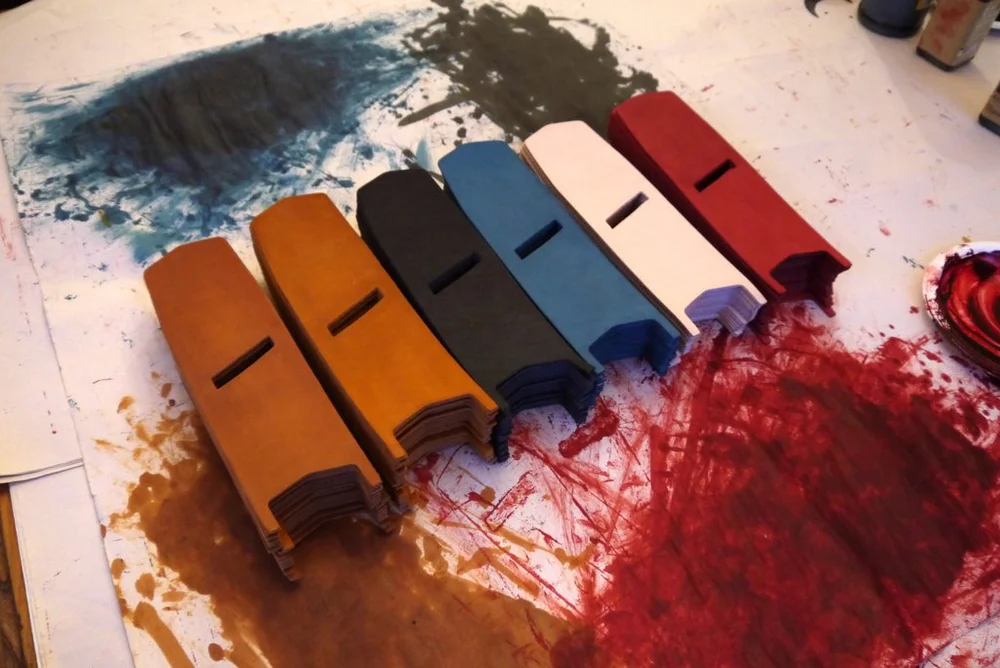
Panels sorted by tone before cutting
Nothing here is fast. An object is drawn until the drawing stops changing, then cut, dyed, struck and sewn by the same pair of hands. What comes off the bench is carried until it either holds or tells us what to fix.
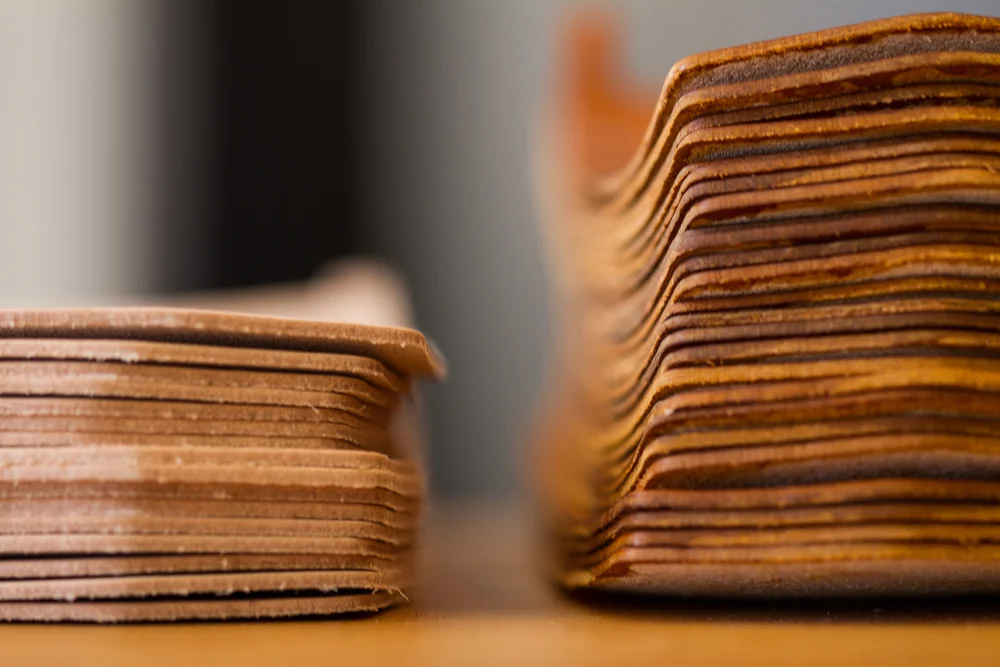
A pattern begins as a paper template, cut and recut against what a pocket actually holds. The line that survives becomes the blank.
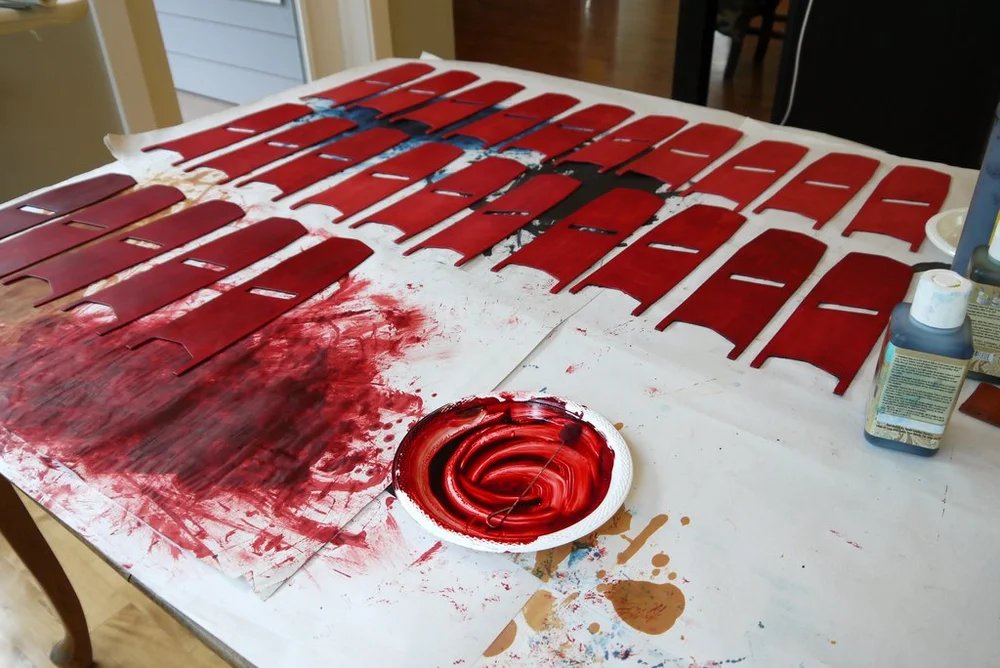
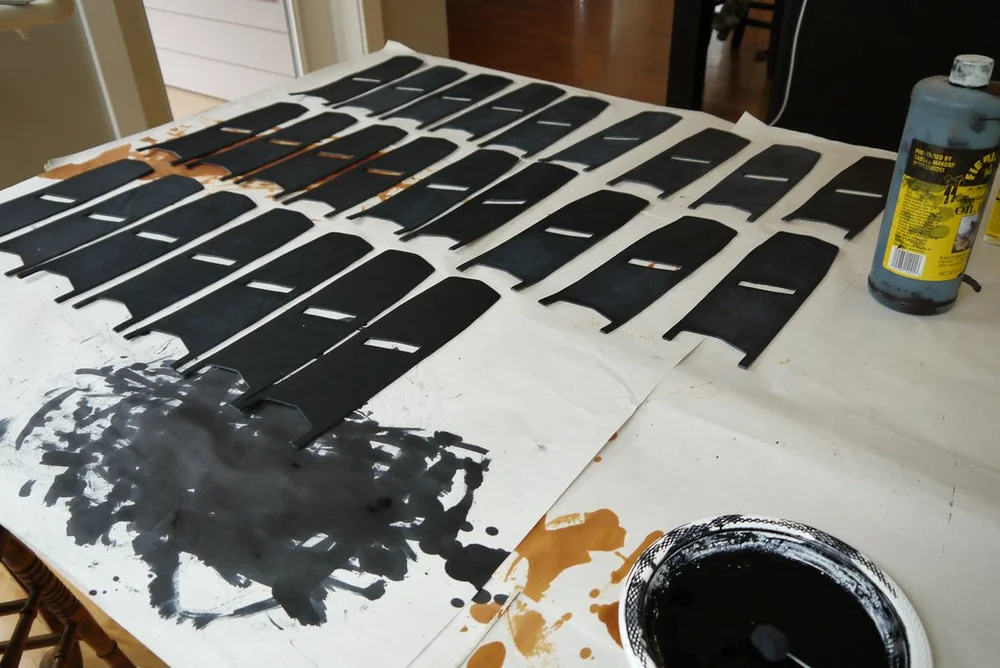
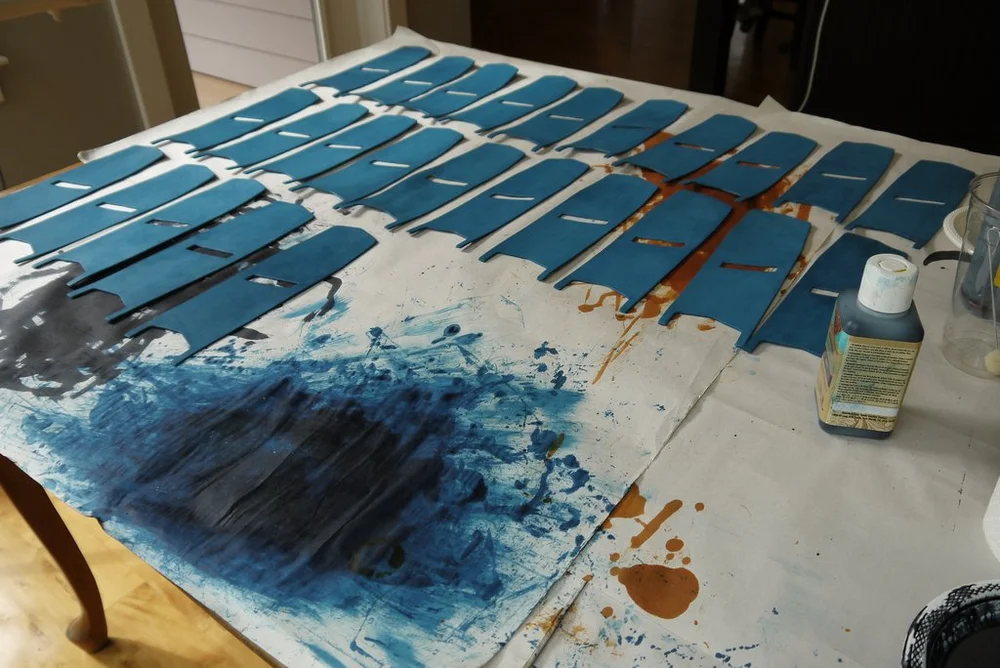
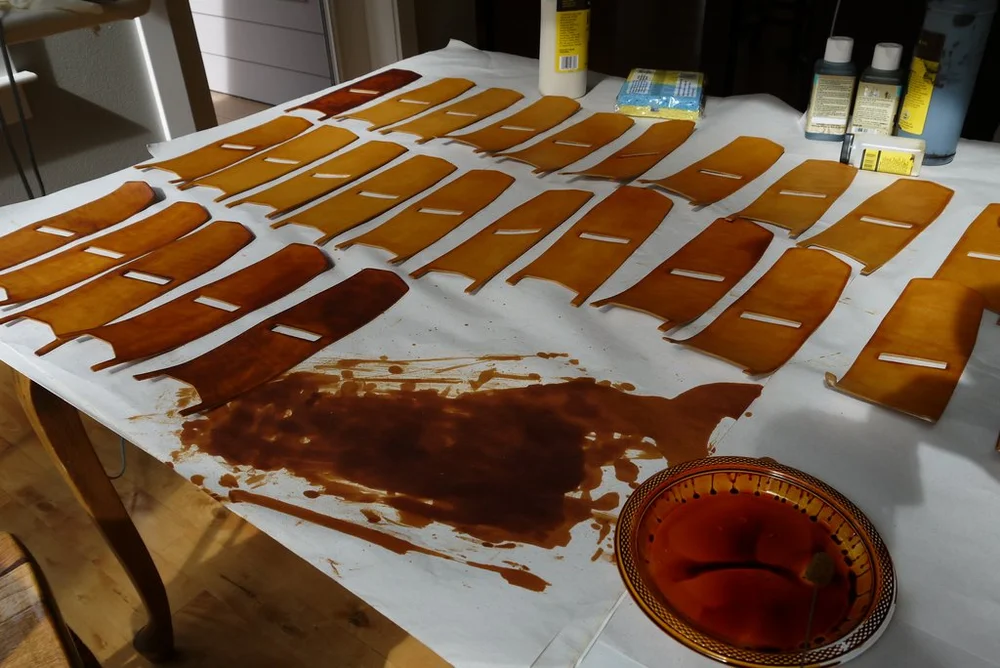
Dye goes on by hand, in coats, until the tone sits where it should. No two panels take it quite the same way, and we sort rather than correct.
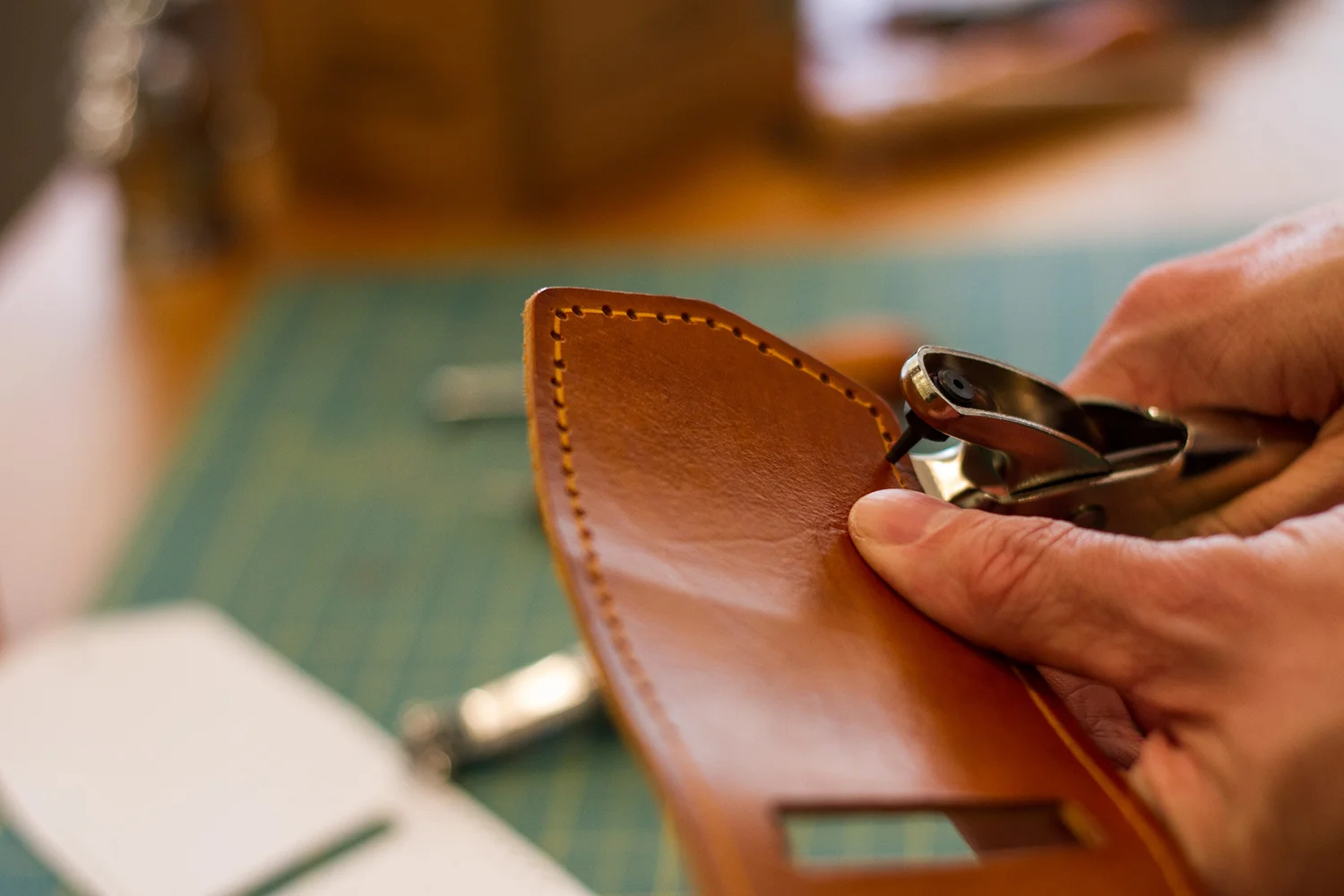
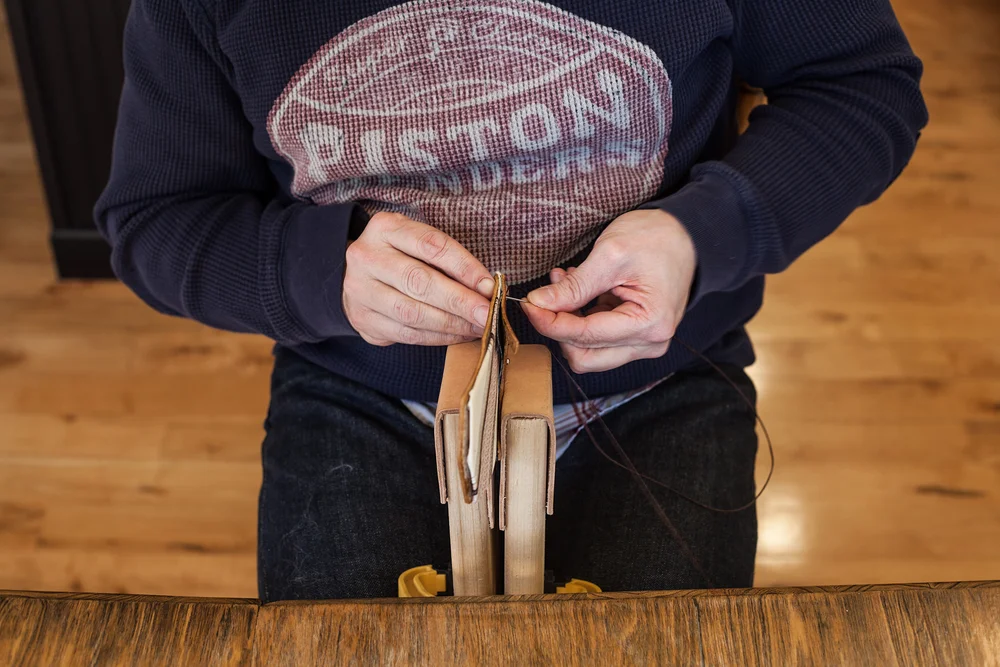
Holes are struck with an iron and a mallet, then closed with a saddle stitch — two needles, one waxed thread, and no machine that can undo itself.
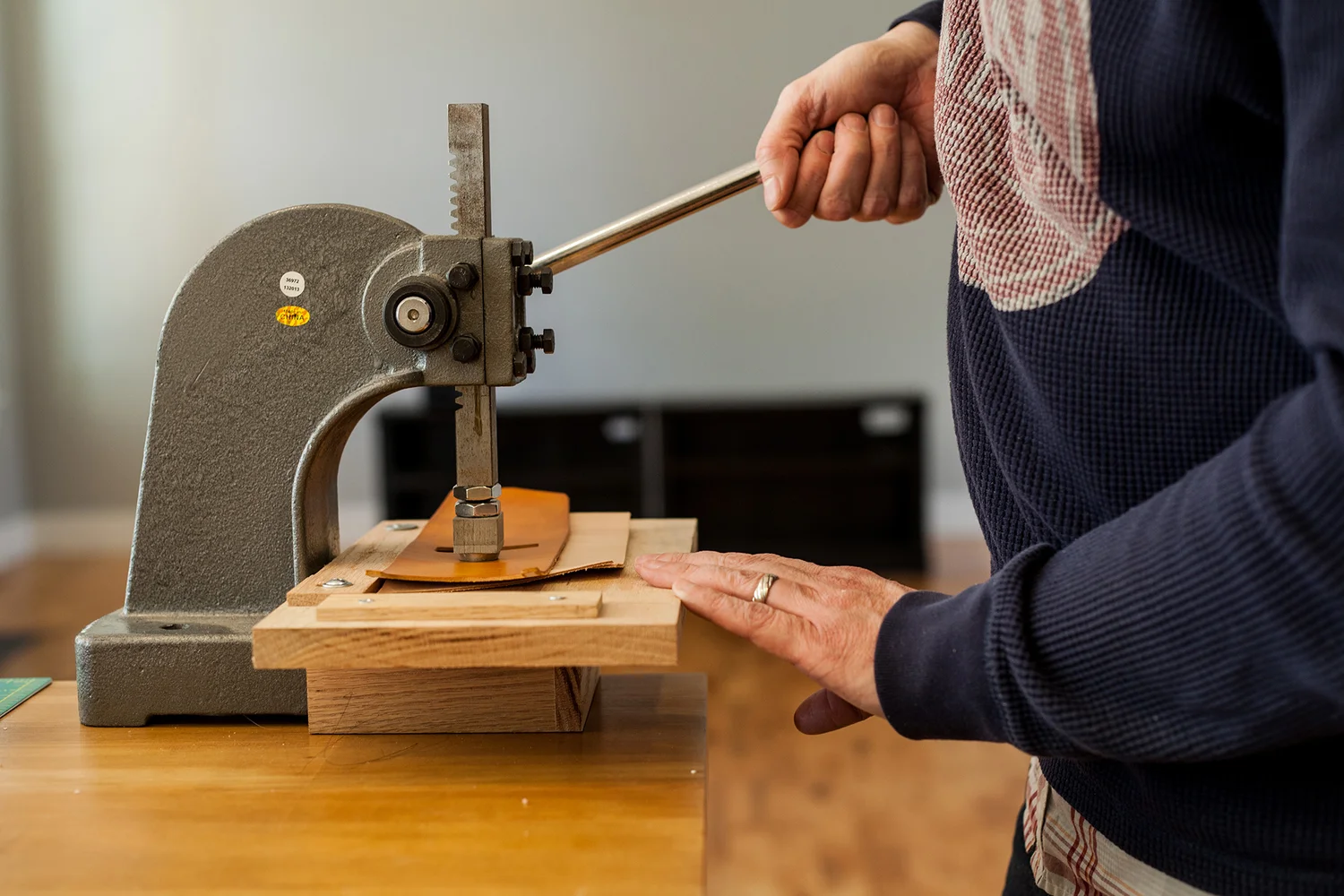
Edges are bevelled, burnished and waxed. The mark is struck last, once the piece has earned it, and the brass is left unlacquered so it darkens where a thumb finds it.
The Mill moved the work next door. Oak is turned on the lathe, cut once at the collar, and the brass ring is set by hand — the same method as the bench, in a harder material.
A blank of American white oak is turned to a single cylinder, sanded through four grits, then parted at the collar where the object opens.
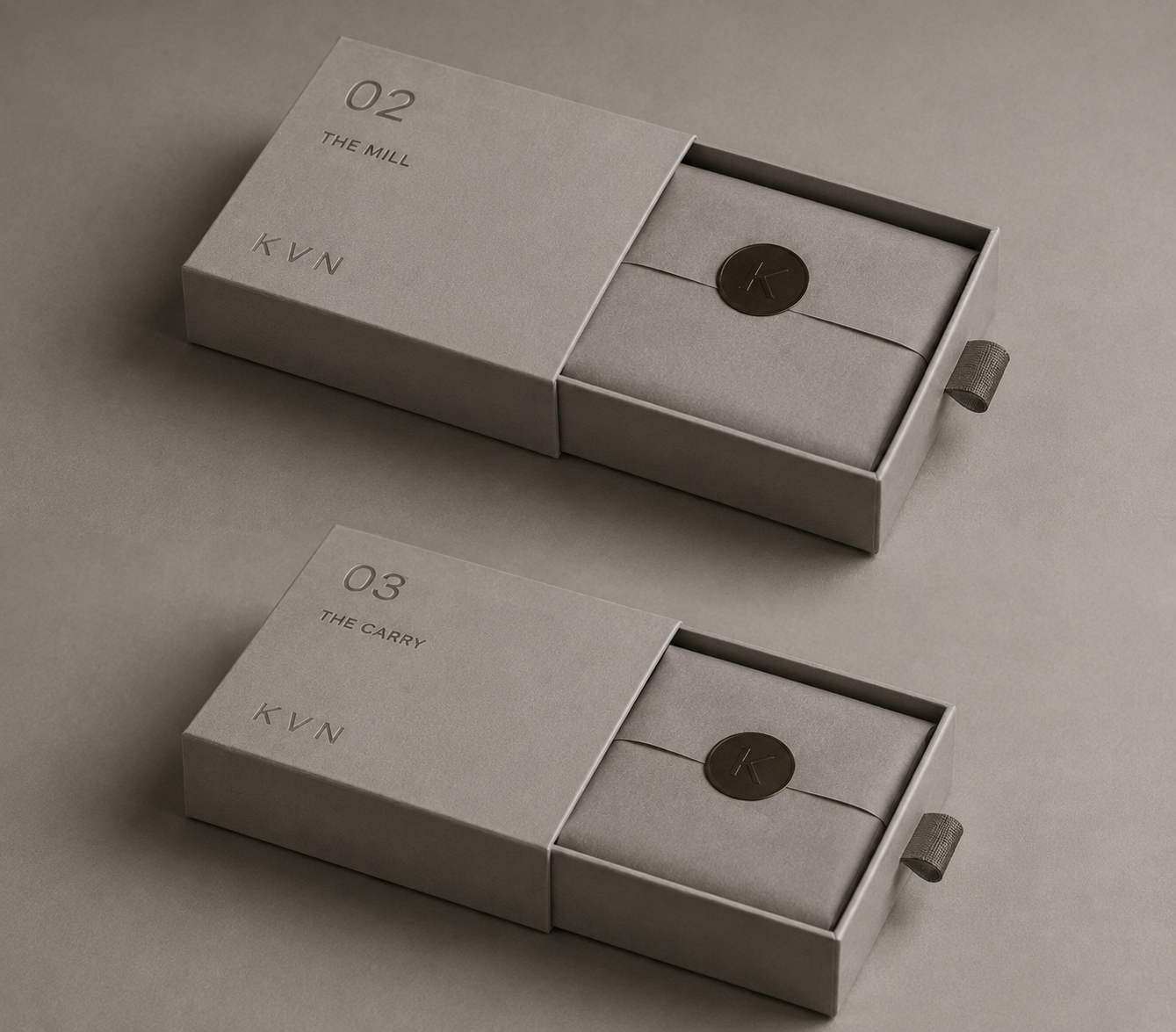
One room and a wood shop in Pray, Montana.
Runs small enough that every piece passes through the same hands.
We repair what we make. Wear is not a fault.